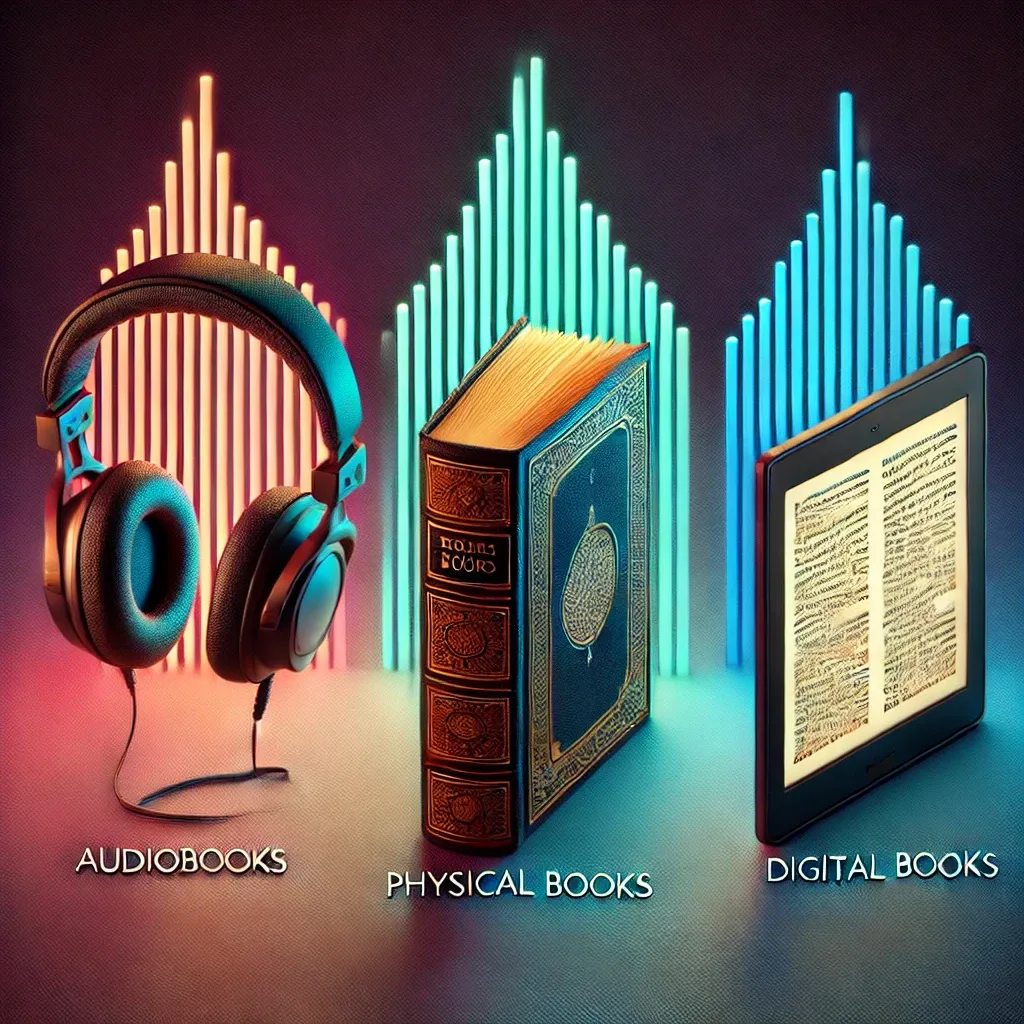
I read books three times to make sure I understand them. Audiobooks for skimming and deciding whether I’m really actually interested, ebooks for absorbing the basic concepts and physical books for studying in detail.

I love reading and do it every day. I read for pleasure, for work and a lot of the time out of curiosity. I believe deeply that reading is the single best activity you can do to improve your life, whether personal or professional.
I also believe that it doesn’t really matter what you read, as long you read something. I read blogs, books, articles and audiobooks (and yes, audiobooks are now considered reading) - anything as long as it’s interesting.
Over time I’ve developed routines that help me retain more when I read. Not ironically, these came from… a book.
The source of the idea
“How to read a book” by Mortimer Adler helped me build some of these habits and it’s a book I highly recommend, even if it can be a bit dry. What I describe below is mostly about non-fiction books, but some aspects of it (like highlighting) also apply to fiction books.
If you’re the kind of person who can listen or read a book once and understand it, then this is not for you. If you sometimes finish a book and then can’t recall the first thing about it then this might help you, like it did me.
The three levels of reading:
I now think of reading at 3 levels:
- Skimming - quick overview to see what it’s about.
- Soaking - a slower, more detailed process to understand the approach and outline the concepts.
- Studying - very deliberate and focused on me understand concepts and linking them to other concepts.
Audiobooks for Inspectional Reading. The skim
I’m never 100% immersed when I consume an audiobook. I’m usually out walking or driving or doing something else so the book is not the sole target of my focus. That means I generally won’t retain information as well from audiobooks. This used to limit what I would consume as an audiobook but now I use it as a tool with certain known limitations.
My pros and cons of using audiobooks for reading
- Pro: Get an overview of what the book is about, understand the main points and get a basic understanding of the topic.
- Pro: Quickly decide if a book is worth the time and effort of dedicated reading or if it should be skipped.
- Con: No way to take notes or do deep thinking or interrogation of a topic. I get a superficial overview of the book and the topic. The strength of the audiobook is also the weakness.
- Audiobook Tip 1: Abandon quickly and frequently. If a topic is boring or poorly written, jump ship and move on to the next book in the queue. (Also - keep a reading queue!)
- Audiobook Tip 2: Use the bookmarks feature in your audiobook player to save interesting sections. You can come back to these later and note them down.
The audiobook process is about time. I want to get through it fairly quickly and sometimes I’ll even play books at 1.25x or 1.5x speed just so I can do the skim faster. I don’t have an expectation of understanding or retention of the concepts at all. If the book is worth it, that comes later.
Ebooks for Analytical Reading. The soak
If I go through an audiobook and decide that this is something I would like to understand in some more detail, I’ll buy the ebook to read on my kindle.
Reading in this way helps me to get the ‘meat’ of the book allowing me to pause and reflect. Because I’m reading on my kindle, it also allows me to highlight interesting sections of paragraphs, which I pull into Readwise (more on that down below).
The highlighting still feels mostly passive to me, since I’m not truly fleshing out my own thoughts alongside the reading. I generally don’t read my kindle with a pen and a pad or other note taking devices. I’m just marking what I find to be interesting.
My pros and cons of using ebooks for reading
- Pro: Easy to make lots of highlights that show up in other tools (like Readwise or notion)
- Pro: Easy to read anywhere
- Con: Hard to make detailed notes or expand on ideas in the moment.
- Ebook Reading Tip: Sync your kindle highlights to an external service so you can review them later.
E-books are still about the book, not me. I’m trying to understand what the author meant and understand the core parts of the book. The highlighting is there so I can come back to it later if needed - but it’s still about the book and not really about me. This is the process of discovery and the highlights are me leaving breadcrumbs for myself to come back to later.
Physical books for Synoptical Reading. The study
This is the final form! Once a book makes it into my actual bookshelf it’s been through my ears and my eyes and now I want to work through it with my hands.
Reading a physical book is for me the most deliberate form of consumption. It’s active and its work that requires me to be in the right mindset for it. This is not discovery - I already listened to the book and read through it to highlight interesting passages. I know what it’s generally about (thanks audiobook) and even which specific pieces I find interesting (thanks to the kindle highlights).
This is time to make index cards, flesh out ideas, review sections and really chew on the topic. In short, this is about ME now. This stage is about me holding the idea up, looking at it and relating it to what I think or what I think I know. I need to decide if I like it or agree with it or whether it’s connected to something else I might know or think.
My workflow for reading a physical book (when trying to understand)
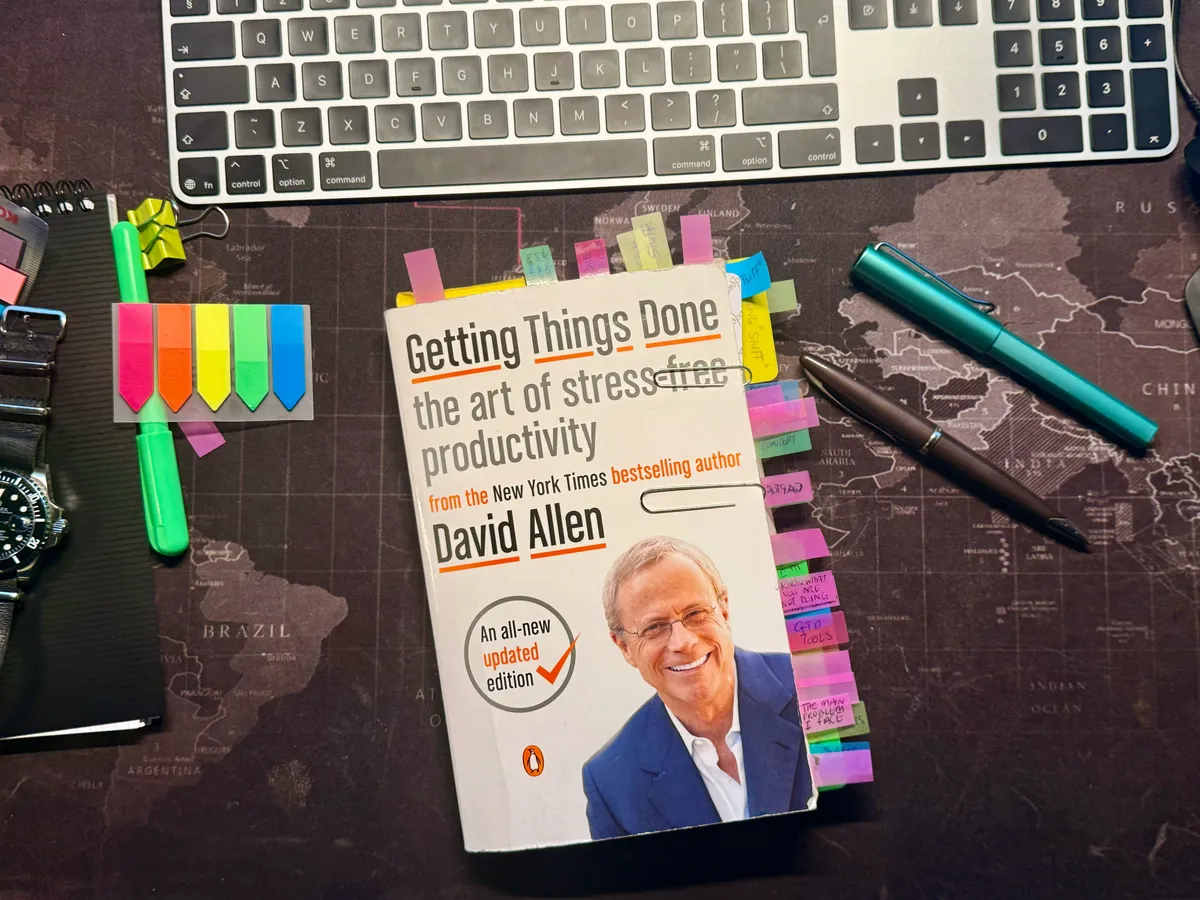
My usual workflow is to have a pen, a highlighter, some tab markers and a sticky note.
The pen: making notes in the book or underlying key passages.
The highlighter: mark REALLY important passages.
Tabs: highlight key chapters so I can jump to important sections easily.
Sticky notes are for actions I want to take. I will usually write the page number and then the idea or action. At the end of the book I will go and pull out all of the sticky notes and read through the ideas the book generated. Those which are STILL good ideas by the end of the book will make it to my idea management system where they can be actioned, or go live in my SOMEDAY / MAYBE list for review in the future.
The sticky notes are really the most valuable part for me. At one point I was using flash cards, like a digital zettelkasten type system, but I find that inputting the concepts into digital tool helps me search and find more easily.
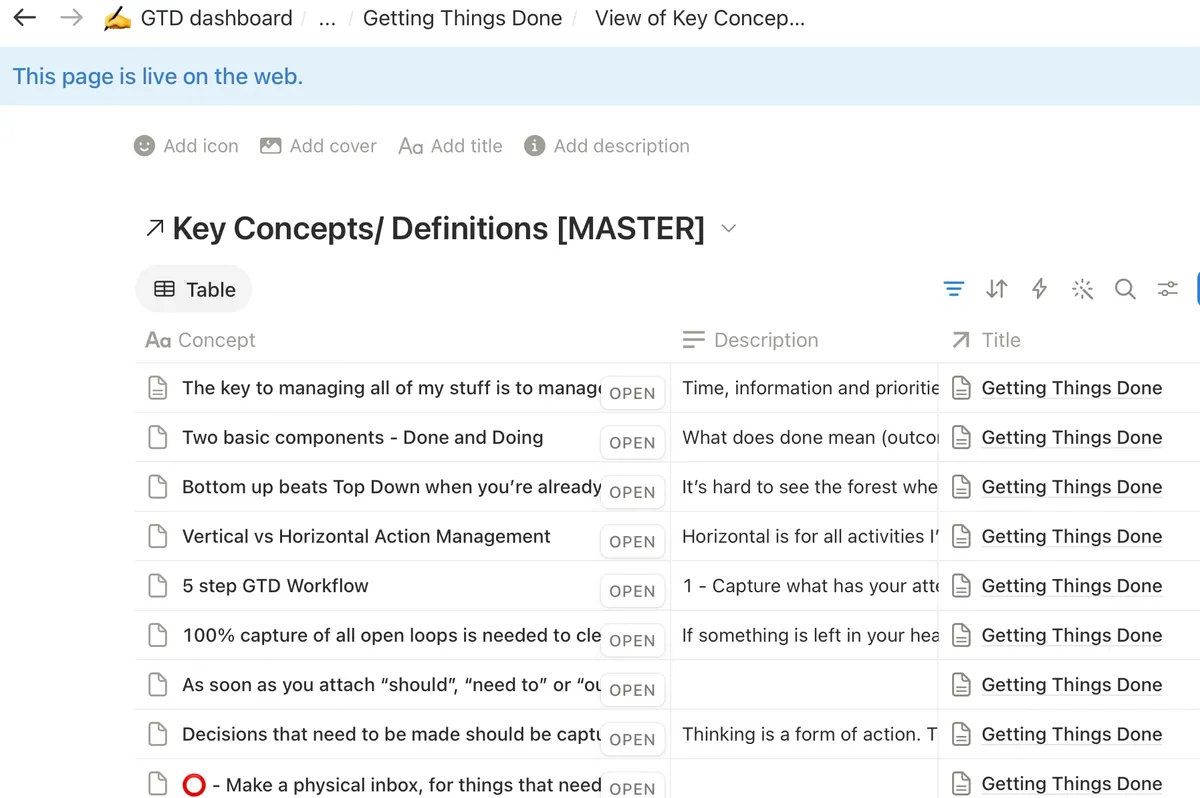
This is especially true for concepts that are not actionable but are just interesting. I’ll drop these into my book notes template in Notion (soon to be AFFine). Previously I would keep these in flash cards or a physical notebook, but I found that I wanted to have it searchable. Another benefit of digital notes is that I can connect concepts from different books together with keywords.
My pros and cons of using physical books for reading
- Pro: Easy to make notes or scribble in the margin when finding a good concept or idea. Extra useful if you “think through your hands” like I do.
- Pro: there’s something intangible about sitting with the printed word that helps me focus more than even a kindle does.
- Con: Notes need to be written or stored elsewhere to prevent them from being lost.
- Con: the books is not always available when the inspiration to read strikes. Books are heavy!
- Con: It’s hard work! This process is very intentional and tiring. It’s not the same as reading for fun.
- Tip: Set up a reading station with your pen, marker, note tabs and sticky notes always in that place so that marking up becomes second nature.
A note on fiction: I almost never buy fiction books in physical form. The exceptions are books I really love and I know I will read them again several times. Stephen King, some F. Scott Fitzgerald, Ernest Hemingway, some Robert Louis Stephenson and a few other authors make up my very limited fiction physical book collection.
A dedicated reading environment helps
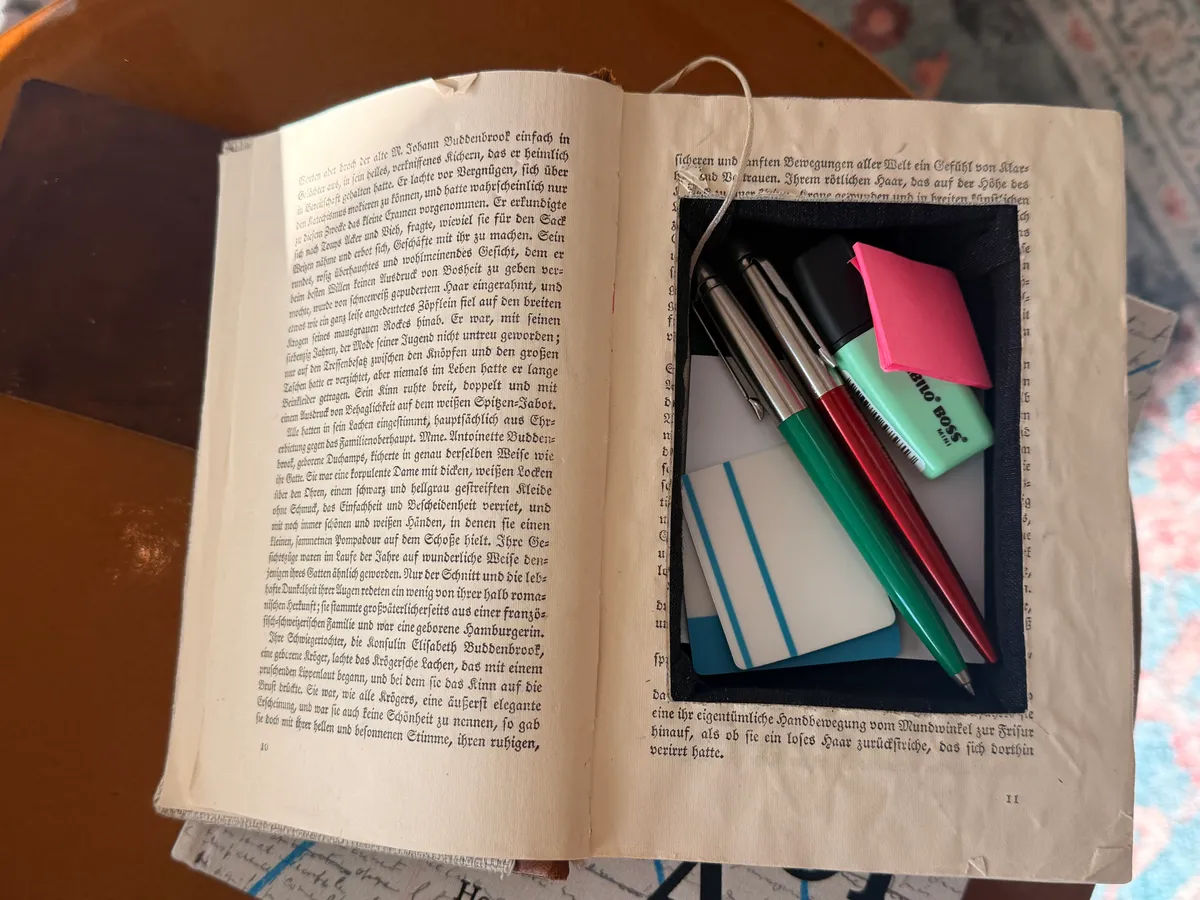
I love my reading chair, complete with secret stationery compartment. When I sit down, I’ll get a cup of tea, put on some background music and sink in to whatever I’m reading for a while.

My reading tools are on a little table next to my chair, tucked away inside an old book so they’re out of the way. Oddly enough I don’t think of this particular set of stationery as writing tools, in my mind they are 100% reading tools. It’s been so long now that I can’t imagine reading a book without them. Again, fiction is different, there I’m just reading for enjoyment not necessarily for retention.
Another note on what makes it to my physical library.
When I purchase a physical book, the book I end up buying is almost never the first one I’ve read on a topic. Kindle-based reading will often lead to more books on the same topics and the physical book is usually the 2nd / 3rd / 4th book on the subject.
I’ve also found that the things I consider interesting in the first book (on the kindle) are now less so and I’ll find myself disagreeing with the author now that I have a firmer grasp on then subject matter and have seen things from a few different perspectives.
Making notes in books with a dedicated shorthand.
I got this idea from Cal Newport but I’ve tweaked it so that it makes sense for me. The margins of my books are full of notes that won’t make sense to anyone else but work for me.
My book margin short hand
A: An action for me to take i: Idea I had while reading ?/ Q: Question I formulated while reading C - Concept that has jumped out at me. R - more research to be done
I think of it as my own personal markdown language. It’s the same when I make meeting notes. Letters with circles around them which I can easily scan - look for all of the As and I know which actions I need to take. Scan for the Rs to see what I wanted to do more research on. It’s fast and makes sense to my brain.
TIP: Spaced repetition: The extra step for retaining more of what I read.
Use Spaced Repetition to make recall easier.
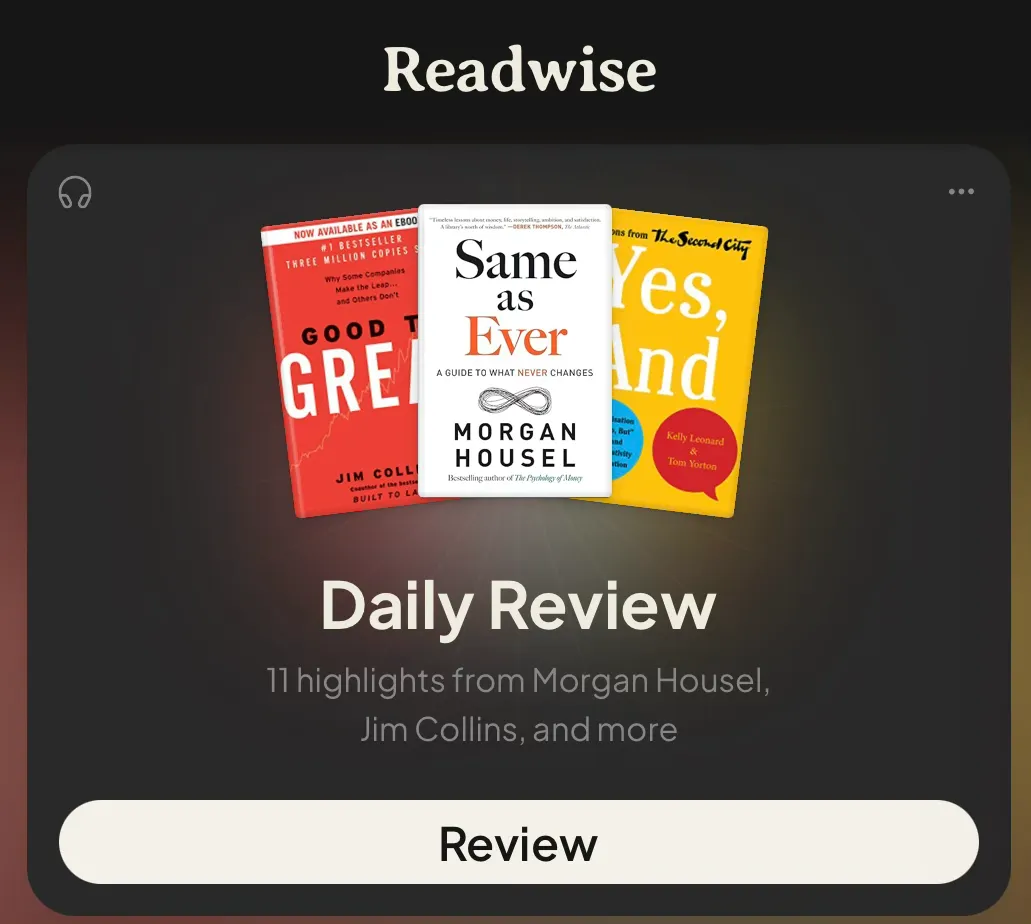
Readwise review feature for spaced repetition.
I’ve been a paying member of Readwise since the app was launched (and a beta tester before that). Readwise makes it easy to review and revisit notes I’ve made on my kindle or even in physical books so I can come back to them over time.
Any time I highlight some text in my kindle, it shows up in Readwise. At one point I had these highlights saved to a Notion database, but it seemed like overkill. Now I open the app pretty much daily to get a few reviews from books I’ve read and it helps me recall details from those titles.
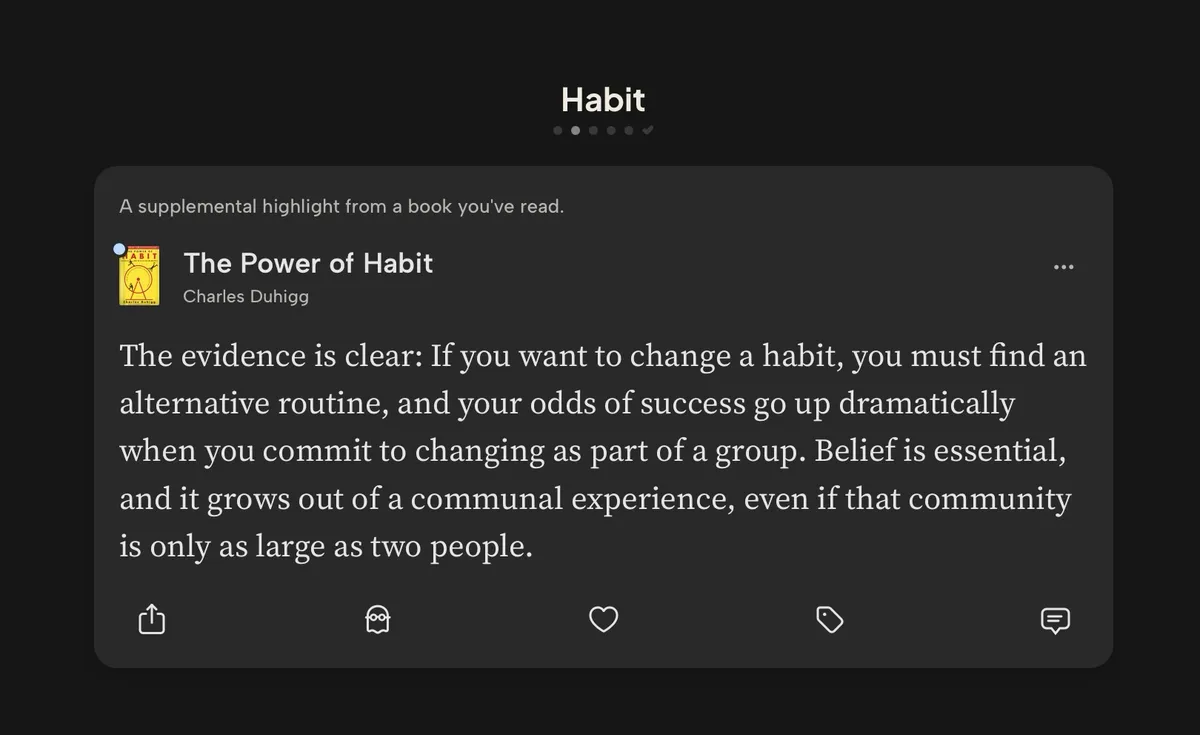
I’ve also built some themed reviews around specific topics like leadership, performance and even one for my favourite literature quotes. These themed reviews help when I want to revisit a specific topic and see what I have highlighted from across all of the books I’ve read.
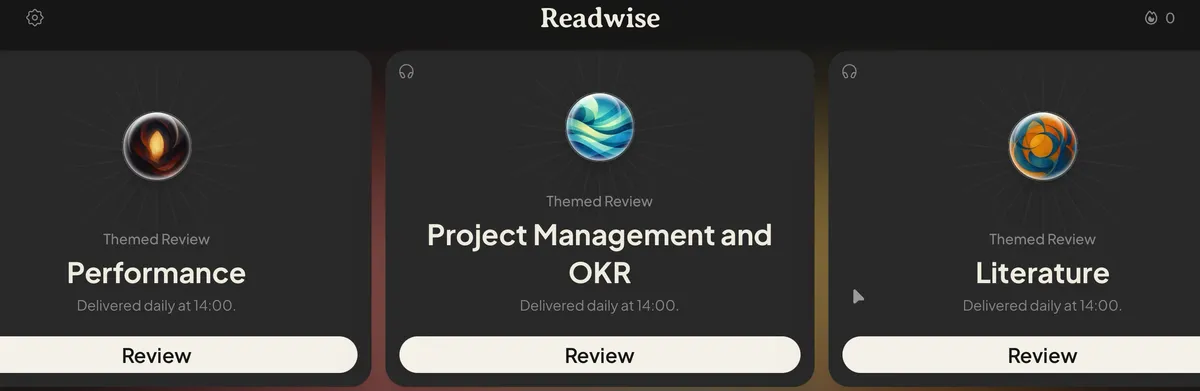
Here’s an example of what my Habit themed reviews might surface in my daily review.
Writing this made me realise just how weird this process must seem to anyone else. It’s ’Normal’ (tm) for me but looking at it now I can’t see why anyone would want to do it this way.
My other (more important) realisation is just how much I actually retain and understand from actually going through this process. And lastly - I really do need to read more. There are so many more amazing books waiting for me!