
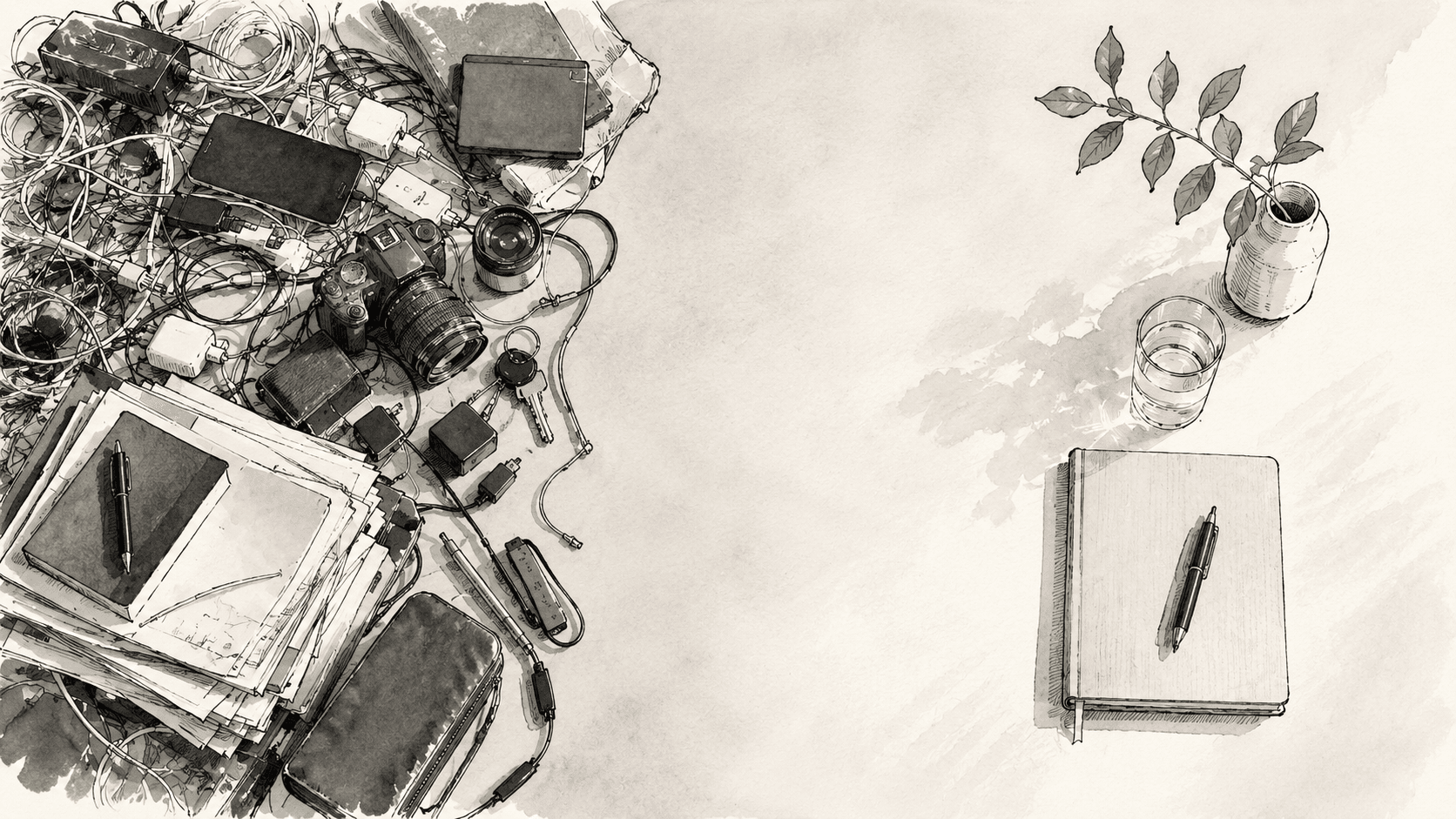
Any new thing that enters your life comes with some form of overhead.
Buying a new thing, trying out a new system, making a new acquaintance - it all comes with admin. Almost nothing simply enters your life and then sits there requiring nothing from you.
There is the cost of getting it. Then there is the cost of having it.
Henry David Thoreau put this particularly well, in a quote that I love and try to remember often:
Let’s say I decide to buy a new camera.
First I need to research the models (this will take me months). Then I need to make a short list and then a short-short list and compare these to my existing camera. At some point I will agonise about my choices and go back to the beginning only to end up with the same short short list so I can compare it against my existing camera.
Eventually I buy a camera…But I’m not finished! Oh no, not by a long shot.
What do I do with the old camera? Sell it? Keep it? Give it to someone? Where do I store the new one? Does it need a new bag? Do I need different batteries, lenses or accessories? How am I going to charge everything? Is there something else I now need to learn or know because I bought this thing? AAARGH!
Suddenly the camera isn’t just a camera anymore. It has become a small system that I need to operate.
That is what I’ve started thinking of as overhead. I guess it’s also the same as mental load.
Overhead is the work required just to keep something running after the initial decision has been made. Everything has overhead and overhead is everything. It’s what’s going to be nagging at you long after the initial decision or purchase is made.
People have overhead tooThis applies to people as much as things. That might sound colder than I intend it to because relationships obviously aren’t products or processes to be optimised.
But people require time, attention and energy. New relationships need to be maintained. New employees need to be managed. New professional relationships create conversations, meetings, messages and decisions. And decisions on where to put all of that new stuff.
All of that can be worthwhile. The point is simply that it isn’t free. This is probably the main reason I have been resisting letting new things into my world faster than I am comfortable with - I can see the overhead coming with all of the stuff.
Another example: Why I’ve been resisting hiring an assistantOn paper, this makes complete sense for me. I have enough going on that another person could take work away from me. But there is a strange contradiction in hiring someone to reduce your overhead: First, you have to create a lot more overhead.
I need to define the job. Interview people. Choose someone. Sort out a contract. Set up payroll. Give them access to things. Explain how I work. Decide what I can delegate. Answer questions. Review what they do. Have regular meetings. Manage the relationship.
Eventually, hopefully, the equation flips and they remove more overhead than they create but I need to wade through all of this other stuff before I get anywhere close to that. And the very reason I need an assistant is because I don’t have the time to do all of the things :(
It also raises another question: Before I hire someone to manage the complexity in my life, how much of that complexity could I simply remove?
Things that don’t exist don’t need maintenance. Systems that don’t exist don’t break. Possessions you don’t own don’t need storage and commitments you haven’t made don’t need managing. More and more, I want to lower my overhead and make my life less stressful to run.
I’m not after this because I want to do nothing all day or not own stuff. I like things, probably a little too much. I like starting new projects and building things or trying new ideas. But I want the things that are in my life to justify the space they occupy. And by space, I don’t just mean physical space I also mean mental space like time and attention.
When I was interested in something new, I used to mostly ask:
Do I want this or do I need this?Now I find myself asking:
- What will it take to get this into my life?
- What will it take to keep it there?
- What new decisions will it create?
- What will need maintaining, managing or organising?
- Is the benefit actually worth all of that?
Sometimes the answer is yes but a lot of the time, it isn’t.
I’m starting to like a very simple rule:
Nothing comes in without something going out.I don’t mean literally one object for one object, it’s more about trying to make sure that the total amount of complexity and overhead in my life should not be allowed to expand indefinitely. If I add a new system, maybe an old system should disappear or if I buy something significant, maybe there is something I already own that I no longer need.
And even if nothing new comes in, I want to remove at least one thing every month. Sometimes it is as small as tossing out a USB cable that’s been sitting in a drawer for months (years!) cos the thing it came with is gone or broken. Every little bit feels like it helps.
My goal with this isn’t really to own less stuff or do fewer things, it’s to have a lower operating overhead and have less of my stuff operating me by owning my time and attention.
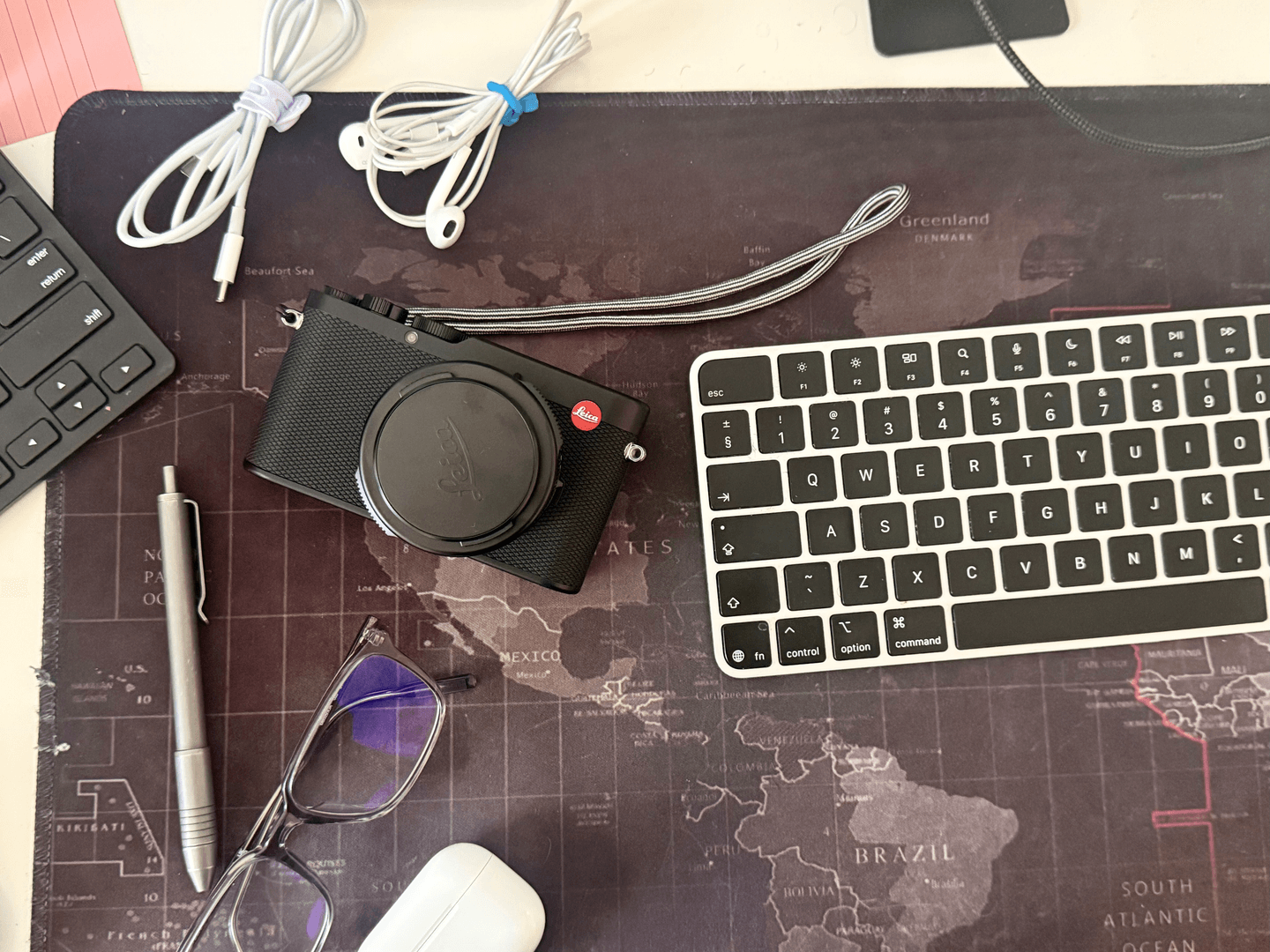
P.S. I did end up choosing a new camera, and I love it :) Now I need to work on not buying the car I took a picture of…talk about an overhead nightmare!

Latest
More from the site
Lester Hein
Ai in the wild
While out shopping with my daughter I noticed that one of the stores was using Ai generate product photos. This seems like an obvious use of the technology, but it was till fascinating for me to actua
Read post
Lester Hein
More AFFiNE tuning to make it stop crashing.
I’ve been moving over from Notion to AFFiNE and the docker container kept crashing. TLDR: if you’re not using the AI features, turn off the copilot process in AFFiNE. Specifically it ran out of memor
Read post
Lester Hein
Fixing self hosted Affine instances that won’t load workspaces.
I recently set up a self-hosted AFFiNE server behind a Cloudflare Tunnel. I’m getting sick of paying for Notion and the AI bloat is making the product very annoying to use. In my mind it was a Simple
Read post